
.png)
Common Electrical Mistakes Homeowners Should Avoid
.webp)
Introduction
Most of the electrical faults we are called to were created by someone trying to be helpful. The work looks finished, it functions on the day, and the problem only surfaces months later under load.
These are the mistakes we see most often, and what to do instead.
Treating Extension Cords as Permanent Wiring
An extension cord run behind furniture or under a rug becomes permanent the moment nobody trips over it. Cords are not rated for continuous concealed use, they cannot dissipate heat under a rug, and they degrade where they bend.
If you need power in a spot with no outlet, the answer is an outlet, not a longer cord.
- Never run cords under rugs or through walls
- Do not daisy-chain power strips
- Check the rating before plugging in a heater
Ignoring Warm Outlets and Switches
A faceplate that is warm to the touch is telling you something. Resistance where there should be none means a loose connection, and loose connections generate heat every time the circuit is used.
This is one of the few electrical symptoms that genuinely warrants stopping use of the circuit until someone looks at it.
Replacing a Breaker With a Larger One
If a breaker keeps tripping, fitting a bigger one stops the tripping. It does not stop the overload; it just removes the device that was protecting the wire from it. The conductor is now the weakest link, and conductors fail by heating up inside the wall.
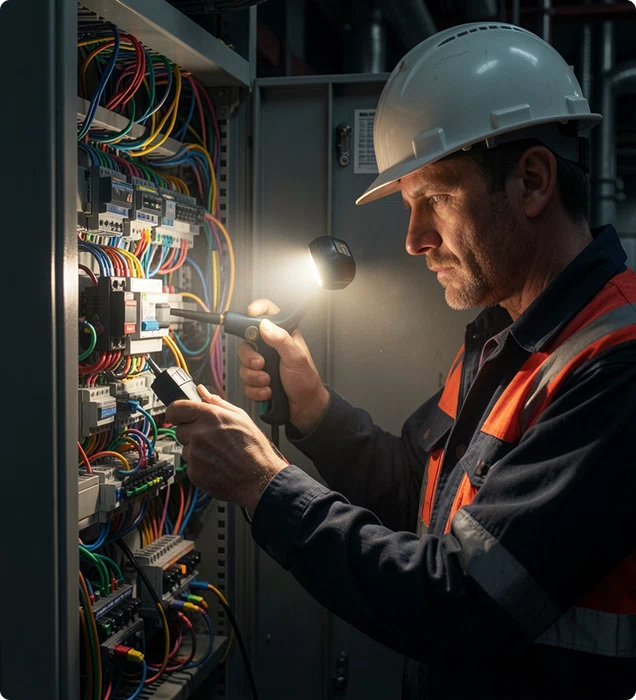
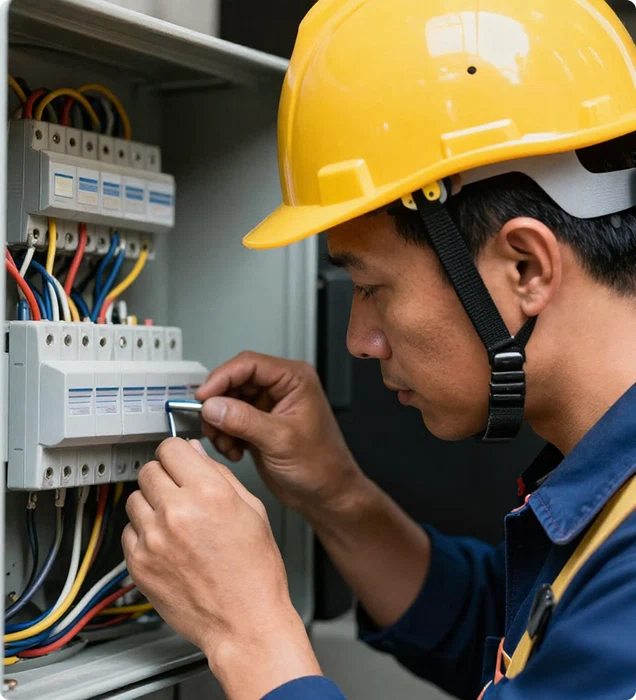
Other Common Errors
Less dramatic, but they all end in the same place.
- Using indoor-rated fittings outdoors
- Overfilling junction boxes with conductors
- Leaving junction boxes buried behind plasterboard
- Mixing conductor sizes on one circuit
- Skipping the ground connection on a two-wire replacement
- Assuming a switch off at the wall means the circuit is dead
When to Stop and Call Someone
Changing a light fitting is reasonable DIY. Anything involving the panel, anything outdoors, and anything you cannot fully isolate and verify is not.
- Any work inside the main panel
- Repeated tripping with no obvious cause
- Burning smell or discoloured faceplates
- Aluminium wiring of any age
- Work that will be concealed behind a finished surface
Conclusion
Almost every serious fault we find started as a small shortcut that worked at the time. The cost of doing it properly is nearly always lower than the cost of finding out later.
