
.png)
Understanding Circuit Breakers: Everything You Need to Know
.webp)
Introduction
A circuit breaker has one job: to disconnect a circuit before the wiring behind it overheats. Everything else about it follows from that single purpose.
Understanding what a breaker is actually protecting makes it much easier to know whether a trip is routine or a warning.
What a Breaker Protects
It is easy to assume a breaker protects your appliances. It does not. It protects the conductor in the wall, which is sized to carry a specific current and no more.
That is why the breaker rating must match the wire, not the load. A larger breaker on the same wire is not more capacity, it is less protection.
Why Breakers Trip
There are three distinct causes and they mean different things.
- Overload: too much current drawn for too long. Usually harmless and self-explanatory.
- Short circuit: live meeting neutral directly. Trips instantly and needs investigating.
- Ground fault: current escaping to earth. Often a sign of moisture or damaged insulation.
An occasional overload trip on a known heavy appliance is the system working. A trip with no obvious cause, or one that repeats, is not.
Types You Will Encounter
Standard thermal-magnetic breakers cover most circuits. GFCI protection is required where water is present. AFCI protection detects the low-level arcing that precedes many electrical fires and is now required across most living spaces in new work.

Resetting Safely
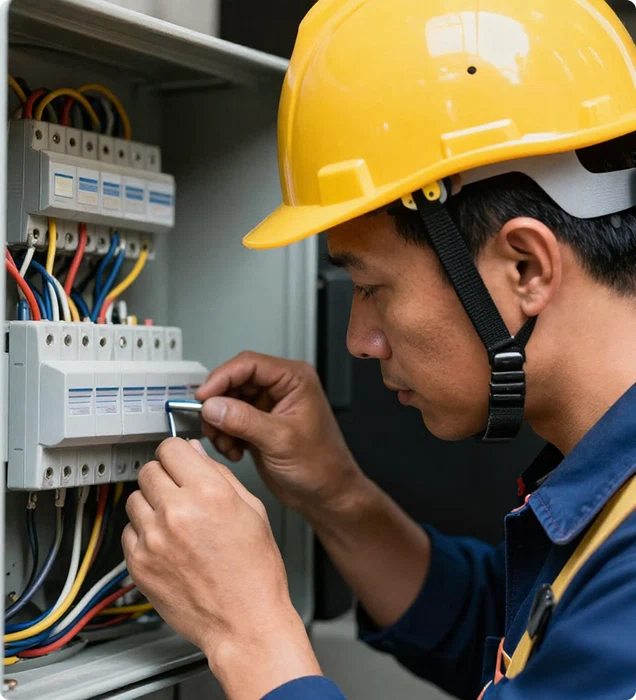
Push the handle fully to off before returning it to on. A breaker reset from the middle position often looks set but has not re-engaged.
- Unplug or switch off whatever was running
- Move the handle fully off, then on
- Reconnect loads one at a time
- If it trips again immediately, stop
When to Replace a Breaker
Breakers are mechanical and they wear. A breaker that trips at well under its rating, feels loose in the panel, or is warm to the touch has reached the end of its life.
- Trips far below rated current
- Will not stay latched
- Warm or discoloured
- Visible corrosion in the panel
- Obsolete panel type with known defects
Conclusion
A breaker doing its job is a good sign, not an inconvenience. The circuits worth worrying about are the ones where the breaker has been oversized, bypassed, or replaced with something the panel was never designed to take.
