
.png)
EV Charger Installation
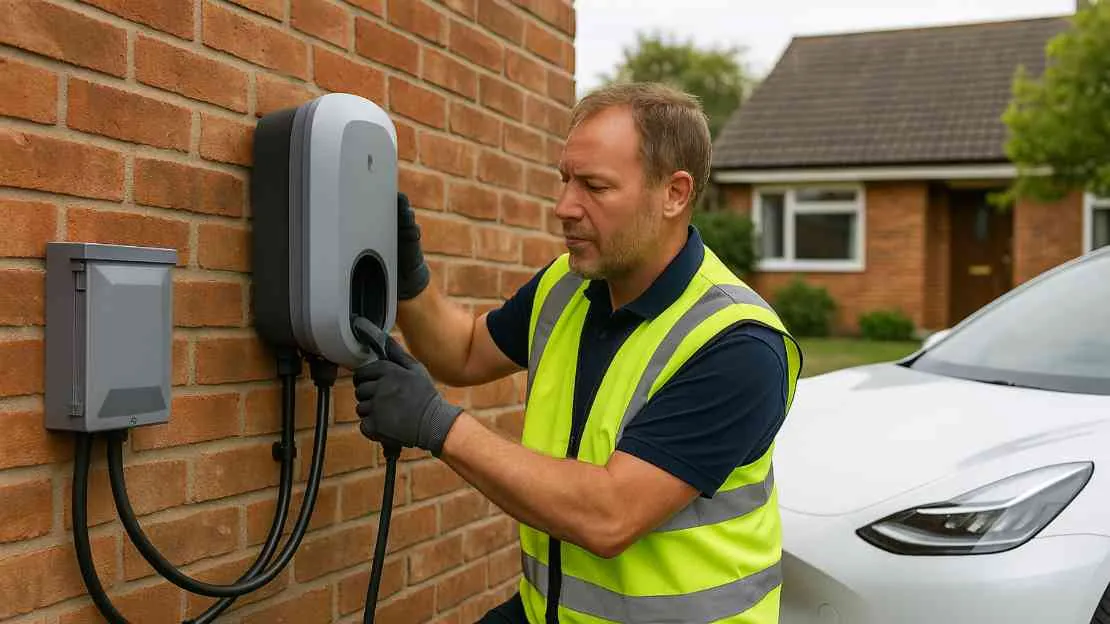

Home EV charging done properly the first time
An electric vehicle charger is one of the largest continuous loads most homes will ever add. It runs for hours at a stretch, often overnight and unattended, which is exactly why it deserves a dedicated circuit sized and installed by a licensed electrician rather than an adapter and an extension lead.
We assess your existing supply before recommending anything. The right charger for your home is decided by your panel capacity, your daily mileage and where you park, not by whichever unit has the highest number on the box.
Key responsibilities:
- Carry out a full load calculation on the existing panel
- Recommend charger type and output based on real usage
- Install a dedicated circuit and correctly rated breaker
- Mount and connect hardwired or plug-in units
- Fit weatherproof enclosures for outdoor installations
- Add load management where panel capacity is limited
- Handle permit applications and inspection scheduling
- Commission and test the charger under real load
Who we are
Our electricians install EV charging equipment across homes, driveways and shared parking. We hold current certification for every major charger brand we fit, and we keep up with the code changes that apply specifically to EV supply equipment, which have moved faster than almost any other area of residential wiring.
We have seen enough poorly executed installations to know where the corners get cut: undersized conductors, shared circuits, missing disconnects, and units mounted in positions that leave the cable stretched across a walkway. None of it shows up on day one, and all of it shows up eventually.
Every installation we complete is documented, permitted and inspected, so you have a record that the work meets code and your insurer has nothing to question.
Required skills:
EV charger installation sits at the intersection of load calculation, code compliance and practical siting. Here is what our team brings to it.
- Accurate load calculations on existing panels
- Current knowledge of EV supply equipment codes
- Correct conductor sizing for continuous loads
- Weatherproof outdoor installation practice
- Load management and panel upgrade options
- Permit handling and inspection coordination
- Charger commissioning and fault diagnosis
- Practical siting for cable reach and daily use
Benefits
A properly installed charger refills your vehicle overnight on a circuit that is doing nothing else, which means no competition with the oven or the dryer and no nuisance trips at two in the morning. Smart units let you schedule charging for off-peak rates, and the saving over a year is usually larger than people expect.
Beyond running cost, a correctly sized and permitted installation protects the rest of your electrical system. Continuous high loads on wiring that was never intended to carry them are one of the more common causes of overheating in otherwise healthy homes. Getting the circuit right removes that risk entirely and leaves capacity in place for whatever you add next.
